
The 5 Best AI Landing Page Builders 2026: Ranked by Use Case & Conversion Potential







Trusted by 3,000+ marketers





Any AI tool can spit out a landing page in under a minute now. That part is solved. The harder question, the one that actually decides your ad account's performance, is what happens to that page once real paid traffic hits it: does it track conversions, block junk leads, and get better over time, or does it just sit there looking finished? For performance marketers choosing an AI landing page builder in 2026, Heyflow is the pick if you need both AI generation and a full conversion stack, including standalone advertorials, in one tool. The other four tools on this list each win a narrower slice of that job. Here is how they compare.
Key Takeaways
Landing page generation is table stakes now: every tool here can build a page from a prompt. What separates them is whether that page ships with ad tracking, lead validation, and testing already wired in, or whether that is still a separate project.
Vibe-coding tools win on speed, not on infrastructure: Lovable produces the most polished raw output fastest but ships with no native ad tracking, no CRM connection, and no lead validation.
Legacy CRO builders bolted AI onto an existing stack: Unbounce and Instapage added AI copy and personalization tools to platforms that still cannot generate a full page from a single prompt.
Heyflow AI covers both jobs at once: it generates multi-step flows, standalone pages, and advertorials from one prompt, with server-side tracking and lead validation live from the first publish.
What Is an AI Landing Page Builder?
An AI landing page builder uses artificial intelligence to generate some or all of a campaign page, copy, layout, tracking, or the full structure, from a prompt or a brief, instead of a designer and developer building it by hand.
What Should a Good AI Landing Page Builder Include?
The best landing page builders do not stop at a pretty draft: they hand back something a performance marketer can put live traffic on the same day. Before you commit to one, use these five criteria to evaluate if the tool is the right choice for you:
Real generation depth: does the tool hand you a finished, trackable page or a starting point that still needs a real build-out before it can run traffic?
Ad signal quality: native server-side tracking against client-side pixels or third-party middleware determines what the ad platform's algorithm actually learns from your traffic. Speed from AI generation is wasted if the page cannot tell Meta or TikTok which visitors actually converted.
Testing and analytics depth: native A/B testing with real statistical significance beats eyeballing two versions of a page. A page that never gets tested against a variant is a guess, not a strategy.
Lead-quality gating: phone or email validation keeps fake and low-intent submissions out of your CRM before they cost your sales team time, and determines how much of the traffic your page attracts is actually usable by sales.
Compliance readiness: SOC 2 and HIPAA coverage matter the moment a regulated vertical, health, insurance, or financial services, enters the picture for the page or the advertorial, not after a security review blocks launch.
Benefits of AI Landing Page Builder Platforms
Beyond any single tool's feature list, adopting an AI landing page builder changes the economics of how your team ships and tests campaign pages:
Faster time-to-launch than manual design and development cycles.
Lower cost per experiment, since more page variants become testable per campaign.
AI-informed structural decisions when the underlying model is trained on real conversion data rather than generic templates.
A more consolidated stack, with fewer point tools, when tracking, testing, and validation ship natively instead of bolted on.
Research Nester values the landing page builder market at $725.24 million in 2025, growing to $2.83 billion by 2035, a sign of how much budget is shifting into this category as AI generation makes new pages cheaper to test.
Build your landing page in minutesThe 5 Best AI Landing Page Builders, Compared
Here is how the five tools stack up on the capabilities that decide paid-traffic performance: generation depth, tracking, testing, lead quality, and compliance.
Quick Comparison Overview
Capability | Heyflow | Unbounce | Instapage | Landingi | Lovable |
|---|---|---|---|---|---|
AI generation depth | Full prompt to flows, standalone pages, and advertorials, tracking and logic shipped intact | AI-assisted copy and Smart Traffic routing; no single-prompt full-page generation | AI content and AdMap personalization; no single-prompt full-page generation | Lunar AI generates a page conversationally, closer to true single-prompt generation | Full prompt to a deployed page or app; strong raw generation output |
Standalone pages and advertorials | Native: one prompt generates flows, standalone pages, and advertorials | Landing pages only; no advertorial-specific generation found | Landing pages only; no advertorial-specific generation found | Landing pages only; no advertorial-specific generation found | Can generate an advertorial-style page, but with no tracking, validation, or compliance layer |
Native ad-platform tracking | Native server-side for Meta, TikTok, Taboola, and Outbrain (Scale plan); Google Ads and LinkedIn are client-side | Client-side pixel only; no official server-side tracking documentation found | Meta Conversions API only via Zapier, confirmed in Instapage's own help center, not native | Native in-app Meta Conversions API integration confirmed in Landingi's own help center; no other platforms found | None native; manual integration required |
Native A/B testing | Native with statistical significance (Scale plan) | Native, gated to the Experiment plan and up | Native, gated to the Optimize plan ($199/month) | Native, gated to the Professional plan and up | None |
Lead quality gating | Phone network validation and SMS OTP (Growth plan and up) | None found | None found | None found | None |
Compliance (SOC 2 / HIPAA) | SOC 2, ISO 27001, and HIPAA on all applicable plans, not enterprise-gated | SOC 2 Type 1 only; no HIPAA claim found on Unbounce's own pages | Not confirmed on Instapage's own pages | No SOC 2 certification and no native HIPAA (will not sign a BAA), per Heyflow's own research | Not applicable |
Multi-step flows & conditional logic | Native advanced conditional logic with multi-condition branching, calculations, and a visual Logic Map | No native conditional logic at any tier; branching requires custom scripts, per Heyflow's own research | No native multi-step or interactive flows; built for single-page experiences | No native complex logic, lacks calculations, visual logic mapping, or multi-condition branching within the form | No native conditional-logic UI; branching has to be hand-coded by the AI per prompt |
1. Heyflow: The Full-Stack Engine for Better ROAS
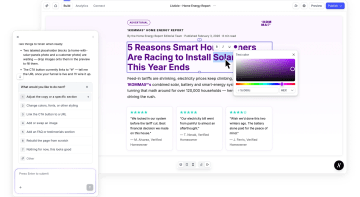
Heyflow is an AI funnel builder platform that generates interactive funnels, multi-step forms, standalone landing pages, and dedicated advertorial pages. It is built specifically for performance marketers running paid social, Google Ads, or native-ad campaigns who need the page to be trackable and test-ready the moment it goes live.
Best for: agencies and in-house teams who need AI generation and the full conversion stack, tracking, lead validation, and testing, without stitching together separate tools, and who want the clean ad-platform data that keeps ROAS stable as spend scales.
Advertorials, generated natively: Heyflow AI can generate a dedicated advertorial page, or any other standalone page, from a single prompt. This matters because dedicated point-solutions for AI advertorial generation now exist purely because advertorials measurably outperform generic product pages on cold, skeptical ad traffic. Heyflow's advantage is that its advertorials ship with the same native server-side tracking and lead validation the rest of the platform has, something the point-solutions do not offer.
Heyflow AI goes well beyond one-shot generation: alongside building a flow or page from a prompt, it can edit and restructure an existing flow through plain-language instructions instead of manual rebuilding, match an existing brand's look and feel from a screenshot or a URL so a new page looks on-brand from the first draft, and analyze a live flow's real performance data to suggest concrete, per-screen fixes rather than generic copy tips. The model behind all of this is trained on more than 150,000 real funnels and over $2 billion in tracked ad spend, so its suggestions come from what has actually converted, not from generic design patterns scraped off the web.
Native server-side tracking for Meta, TikTok, Taboola, and Outbrain: no other tool on this list matches it. For native-ad campaigns that is the whole story: conversions flow back to Taboola and Outbrain server-side, with no middleware, so the networks' algorithms learn from every conversion the advertorial actually generates. Google Ads and LinkedIn tracking at Heyflow run through client-side pixels, not server-side APIs, so treat that distinction as fixed rather than a gap to close later.
Native A/B testing with statistical significance on the Scale plan, so you are not relying on a separate testing tool once you outgrow manual comparisons.
Phone network validation and SMS OTP, available from the Growth plan, block fake and junk leads before they ever reach your CRM, a gap on every other tool in this list. Native TrustedForm and Jornaya (Verisk) integrations add a certified consent record and a unique lead ID per submission, which matters for TCPA-regulated lead generation in insurance, legal, and financial services.
HIPAA compliance on all applicable plans, not walled off behind an enterprise tier, which matters the moment a regulated vertical, health, insurance, or financial services, needs a page or advertorial. Heyflow is also SOC 2 Type II certified and ISO 27001 certified, and fully GDPR-compliant with all data hosted and processed in Europe.
The tradeoff: there is no permanent free plan, and native A/B testing plus the full tracking suite sit on the Scale plan rather than the entry tier, so budget for that if testing is a day-one requirement.
Pricing: Starter from $49/month, Growth from $89/month, Scale from $239/month, custom Enterprise pricing above that.
Try Heyflow for free2. Unbounce: The Traffic-Routing Optimizer
Unbounce is an established landing page platform where AI, Smart Copy and Smart Traffic sit on top of an existing template-and-testing product rather than generating a page from scratch.

Best for: agencies and marketers who want AI-assisted copy and automatic traffic routing between manually built page variants, not full single-prompt generation.
Smart Traffic AI automatically routes visitors to the best-converting page variant, removing manual guesswork from split testing.
Unlimited A/B testing is available from the Experiment plan and up.
Unbounce's own security pages confirm SOC 2 Type 1 certification, with no HIPAA claim found anywhere on Unbounce's own documentation.
Limitations: Unbounce does not generate a full page from a single prompt the way AI-native tools do, and no official documentation confirms native server-side tracking for any ad platform, so treat its tracking as client-side pixel only. Smart Traffic itself is gated to the top Optimize plan.
Pricing: Build from $99/month ($74/month billed annually), Experiment from $149/month ($112/month annually, unlocks A/B testing), Optimize from $249/month ($187/month annually, unlocks Smart Traffic).
3. Instapage: The Enterprise Ad-Mapping Specialist
Instapage is a CRO platform built around AdMap, a tool for mapping and personalizing individual ad campaigns to matching page variants at scale.
Best for: larger teams running dozens of ad variants who need per-ad personalization, not marketers who want single-prompt page generation.
AdMap ties specific ad campaigns to specific page variants for tighter message match at scale.
Server-side A/B testing becomes available from the Optimize plan.
Limitations: Instapage's own help center documents that Meta Conversions API tracking is available only through a Zapier integration, not natively. It also does not generate a full page from a single prompt. A/B testing is gated to the $199/month Optimize plan; the entry Create plan is builder-only.
Pricing: Create from $99/month ($79/month billed annually), Optimize from $199/month ($159/month annually), Convert priced on request.
4. Landingi: The Bulk-Generation Workhorse
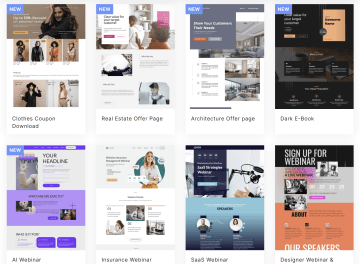
Landingi is a landing page platform whose Lunar AI generates a page conversationally, positioned for teams that need to ship many campaign pages fast rather than a handful of highly polished ones.
Best for: agencies and lean PPC teams that need fast, testable pages per campaign at the lowest entry price on this list.
Lunar generates a page through conversation, closer to true single-prompt generation than Unbounce or Instapage manage.
Native A/B testing is available from the Professional plan.
Landingi's own help center documents a native, in-app Meta Conversions API integration, using a pixel ID and access token directly in the platform, not only the third-party Zapier route most competitors rely on. It covers Meta specifically; no equivalent for TikTok or other platforms was found.
It is the lowest entry price on this list.
Limitations: Landingi lacks native phone or email lead-validation features, so junk submissions still reach your CRM unfiltered. It also has no SOC 2 certification and will not sign a HIPAA BAA, which rules it out for regulated verticals regardless of price.
Pricing: Lite from $29/month ($24/month billed annually), Professional from roughly $69 to $149/month depending on plan generation, Scale and Enterprise priced on request.
5. Lovable: The Design-First Code Generator
Lovable is an AI-native tool that generates a full application, including a landing page, from a single prompt. It produces the fastest and most visually flexible raw output on this list, and the least marketing-ready one.
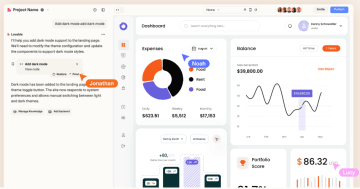
Best for: founders and designers who want a fully custom, polished page or internal tool and are comfortable building the tracking, CRM, and testing layer separately.
Genuine full-page and full-app generation from one prompt, with production-grade code output.
Strong visual and design control, with custom domains on paid plans.
Limitations: no native Meta Pixel, Conversions API, or UTM auto-configuration; no A/B testing or funnel analytics; no lead validation. Its credit-based pricing model means heavy use can push real cost well above the sticker price.
Pricing: Free plan with limited daily credits; Pro from $25/month ($21/month billed annually); Business from $50/month ($42/month billed annually); custom Enterprise pricing above that.
Important: As ad spend scales, a worse ROAS is rarely about worse ads. It is usually a colder audience: more spend reaches more people who have never heard of your brand before. Generation speed matters less here than what the page does with that skeptical, cold click, building trust, asking the right questions, and leading to a yes. That is exactly why advertorials earn their place on this list, and why the tracking layer behind the page matters just as much as the page itself: an ad platform's algorithm can only learn from conversions it can actually see.
How to Choose the Right AI Landing Page Builder for Your Use Case
The right pick depends less on which tool is best overall and more on what your team actually ships. Use this routing list to match your situation to the tool above that handles it natively:
You run paid social or native-ad campaigns and need the page, the tracking, and the lead validation to ship together: Heyflow. It is the only tool on this list that generates advertorials and multi-step flows from one prompt with native server-side Meta and TikTok tracking and phone/SMS lead validation built in.
You manage dozens of ad variants and need per-ad message match at scale: Instapage. AdMap ties each campaign to a matching page variant, though A/B testing sits behind the $199/month Optimize plan. If you would rather generate the ad and the page together than map them by hand, Heyflow's AI Campaigns creates on-brand Meta lead-gen campaigns, ads and funnel in one workflow, with a one-click push to Meta.
You build pages manually and want AI to handle copy and traffic routing between them: Unbounce. Smart Copy and Smart Traffic optimize variants you build yourself; there is no single-prompt page generation.
You ship many campaign pages on a tight budget: Landingi. It has the lowest entry price on this list ($29/month) with conversational Lunar AI generation, but no lead validation and no SOC 2 or HIPAA, so skip it for regulated verticals.
You need a fully custom, design-first build and can wire up tracking yourself: Lovable. It produces the fastest raw output on this list, but ships with no native ad tracking, testing, or lead validation, so it suits prototypes and internal tools more than pages taking live paid traffic.
You operate in a regulated vertical, health, insurance, or financial services: Heyflow again. HIPAA compliance is on all applicable plans, while Landingi will not sign a BAA and Unbounce shows no HIPAA claim on its own pages.
Conclusion: The Right AI Landing Page Builder for Your Team
Raw AI generation is commoditized now. Every tool on this list can turn a prompt into a page. What actually separates them in 2026 is what ships alongside that page: tracking that ad platforms can trust, validation that keeps junk leads out, and testing that proves what is working. For performance marketers who need AI generation and a full conversion stack, including advertorials, in a single AI landing page builder, Heyflow is the tool built for exactly that job.
FAQ
What's the difference between an AI landing page builder and an AI form or funnel builder?
Landing page tools focus on a single, standalone page built for one campaign. Funnel and form tools add multi-step logic and lead qualification across several screens. Heyflow generates both a standalone page and a multi-step funnel from the same prompt, so the distinction matters less than which output your campaign needs.
Can an AI-generated landing page still use native Meta or TikTok ad tracking, or do I need Zapier or GTM on top?
It depends heavily on the tool. Instapage needs a Zapier integration to send data to Meta's Conversions API, confirmed in its own help center. Heyflow ships Meta and TikTok server-side tracking natively, with no middleware required, and extends the same server-side route to Taboola and Outbrain for native-ad campaigns.
Which AI landing page builder is best for advertorials and native-ad campaigns?
Dedicated advertorial point-solutions exist, but they typically lack tracking, lead validation, and compliance coverage. Heyflow AI generates advertorials with the same server-side tracking and validation infrastructure as its funnels, so the page and the data behind it launch together. For the native networks specifically, Taboola and Outbrain conversions flow back server-side, so the networks' algorithms learn from every conversion the advertorial generates.
Do AI landing page builders support HIPAA compliance for healthcare, insurance, or financial-services campaigns?
Most either lock HIPAA behind an enterprise tier or do not offer it at all. Landingi, for example, will not sign a BAA. Heyflow includes HIPAA compliance on all applicable plans, not just its highest tier. Heyflow is also SOC 2 Type II and ISO 27001 certified, with all data hosted and processed in Europe.
Do AI landing page builders include lead validation?
None of the other tools on this list ship native lead validation, so fake and junk submissions reach your CRM unfiltered. Heyflow includes phone network validation and SMS OTP from the Growth plan, and its native TrustedForm and Jornaya (Verisk) integrations add a certified consent record and a unique lead ID per submission, which matters for TCPA-regulated lead generation in insurance, legal, and financial services.
Is Lovable a good AI landing page builder for performance marketers running paid ads?
Lovable is strong for raw page and app generation with genuine design flexibility, but it ships with no native ad tracking, no A/B testing, and no lead validation. It suits prototypes and internal tools better than a live page taking paid traffic.
Recommended articles
The 6 Best Lovable Alternatives for High-ROAS Funnels (2026)
Lovable is great for building apps, but not for funnels. Compare 6 Lovable alternatives, including Heyflow, built for high-ROAS forms and sign-ups.
Read more
Conversion Rate Optimization Tools: The 8 Best Platforms 2026
Most CRO lists compare tools built for different jobs. See which of 8 conversion rate optimization tools fits a paid-traffic funnel. Compare now.
Read more
The 7 Best Lead Qualification Tools in 2026
Your ad spend keeps climbing, but your sales team keeps complaining about the same thing: too many leads who were never going to buy. Marketing hits its volume targets while reps burn hours qualifying contacts who should have been filtered out before they ever reached a CRM record. Closing that gap matters if you want ROAS and pipeline velocity moving in the same direction. So which of these seven tools actually closes that gap for your team?
Read more