
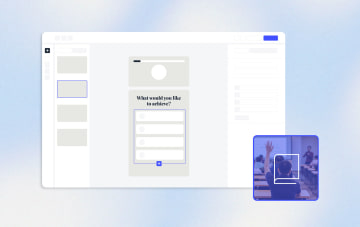
The Best Funnel Builder for EdTech Companies in 2026







Trusted by 3,000+ marketers





Choosing the right funnel builder for EdTech companies can mean the difference between a pipeline full of unqualified names and a steady flow of sales-ready prospects. If you are running paid campaigns for a learning platform, online course, or institutional SaaS product, you already know that generic forms and single-step landing pages fail to capture the nuance your buyers demand. Complex stakeholder journeys, seasonal procurement cycles, and a mobile-dominant audience require funnels that qualify, segment, and personalize in real time. Heyflow gives EdTech marketers the no-code tools to build exactly that.
Key Takeaways
Unqualified leads are draining EdTech budgets: High customer acquisition costs and long sales cycles make it critical to filter prospects at the funnel level rather than wasting sales resources on low-intent contacts.
Specialized funnels deliver value before asking for a commitment: Interactive experiences like ROI calculators, course recommendation quizzes, and scholarship estimators earn trust by giving prospects personalized results, which dramatically improves lead quality and engagement.
Modern funnel builders close the mobile conversion gap: With mobile traffic dominating education audiences, a funnel that loads in under two seconds with page speed scores above 90 is essential for capturing leads that slower pages lose.
Heyflow combines Conditional Logic, built-in calculations, and compliance in one platform: With 50+ native integrations, SOC 2 Type II and ISO 27001 certifications on all plans, and proven results including an 80%+ conversion rate increase, Heyflow is purpose-built for the complexity EdTech funnels demand.
Why EdTech Companies Need a Purpose-Built Funnel Strategy
EdTech companies face a unique set of lead generation challenges that generic marketing playbooks simply cannot solve. Whether you sell a learning management system to school districts or market online courses directly to learners, your funnels need to do more than collect email addresses. They need to qualify, segment, and route leads based on complex criteria, all while loading instantly on mobile devices and handling sensitive data responsibly.
The Lead Quality Crisis: Why Volume-Based Campaigns Are Failing EdTech
Generating leads is rarely the problem for EdTech companies. Converting them is. With customer acquisition costs in EdTech ranging from $245 to $862 depending on the segment, every unqualified lead that reaches your sales team is a direct hit to your bottom line. One EdTech founder running Meta campaigns for an AI programming course saw hundreds of leads pour in, but enrollment rates hovered around just 2%. The sales team was spending hours on calls with people who had downloaded a free ebook but had zero interest in a $3,000 course.
The root cause? Single-step forms that prioritize volume over qualification. When your funnel asks for a name and email and nothing else, you get exactly what you asked for: a list of names with no context, no intent signal, and no way to prioritize outreach. A purpose-built lead generation tool with multi-step architecture and Conditional Logic lets you qualify prospects before they ever reach your CRM.
The Mobile Conversion Gap EdTech Cannot Ignore
Education landing pages see roughly 6x more traffic from mobile devices than desktop, according to Unbounce's Conversion Benchmark Report. Yet desktop converts 17.6% better. That gap represents an enormous amount of wasted ad spend. Mobile visitors are impatient. If your funnel loads slowly, renders poorly on a small screen, or forces pinch-to-zoom interactions, they leave. A Mobile-First funnel builder that loads in under 2 seconds and scores above 90 on page speed tests is not a nice-to-have for EdTech. It is the single biggest technical lever you can pull to improve conversion rates.
B2B vs. B2C: Two Fundamentally Different Funnel Challenges
B2B institutional EdTech deals with multi-stakeholder buying committees (curriculum directors, IT administrators, finance, and teachers), sales cycles of 6 to 18 months, and procurement tied to academic calendars. Your funnel needs to identify the stakeholder role, institution size, and timeline, then route each lead to the right sales specialist with full context.
B2C consumer EdTech (online courses, bootcamps, tutoring) faces a different challenge: high lead volume but low intent. Prospective learners are browsing multiple options simultaneously, and speed-to-contact is critical. Your funnel needs to deliver immediate value, such as a personalized course recommendation or a cost estimate, to earn the right to ask for contact details. Both scenarios demand far more than a static form can deliver.
High-Converting Funnel Types for EdTech Companies
The most effective EdTech funnels follow a "help first, sell later" principle. They deliver personalized value to the prospect before asking for a commitment. Here are the funnel types that drive results across both B2B and B2C EdTech segments.
Funnel Type | Segment | What the User Enters | Value They Receive | What Your Business Gains |
ROI / Savings Calculator | B2B | Student count, current tools, budget, pain points | Estimated cost savings and projected outcome improvements | Pre-qualified leads with budget data for sales prioritization |
Course / Program Finder Quiz | B2C | Career goals, skill level, budget, preferred learning style | Personalized course recommendation with timeline and outcomes | Segmented leads with rich data for tailored nurture sequences |
Multi-Step Qualification | B2B | Institution type, role, seats needed, procurement timeline | Tailored case study and relevant demo scheduling | Leads routed to the right sales specialist with full context |
Scholarship / Aid Estimator | B2C | Desired program, income level, employment status | Estimated aid eligibility and payment plan options | High-intent leads who have moved past the cost objection |
Skills Assessment Quiz | B2C | Self-assessed skills, target role, experience level | Personalized skills gap analysis and recommended starting point | Engaged prospects with urgency created by identified skill gaps |
Demo / Consultation Booking | B2B | Institution size, department, use case, preferred time | Instant calendar booking with pre-demo resource | Eliminated scheduling friction and faster speed-to-contact |
One documented example shows the power of in-funnel segmentation: a UX design bootcamp that segmented leads based on their current situation at the funnel level saw email engagement rates increase by 156% and course enrollment rates jump by 89%. That kind of lift comes from Conditional Logic built into the funnel itself, not from post-capture CRM workflows. Heyflow's interactive funnel experiences are designed precisely for these use cases, with built-in calculation features, dynamic paths, and real-time personalization.
What to Look for in a Funnel Builder for EdTech
Not every funnel builder can handle the complexity EdTech demands. Before you evaluate tools, here are the capabilities that matter most for this industry.
Mobile-First design and fast page speed: With mobile traffic dominating in education, your funnel builder must deliver page speed scores above 90 and load times under 2 seconds. Anything slower and you are losing leads before they see your first question.
Advanced Conditional Logic: You need dynamic branching that routes a curriculum director down a different path than an IT administrator, or sends a career-changer to a different course recommendation than someone upskilling in their current role.
Built-in calculation features: ROI calculators, scholarship estimators, and cost comparison tools should work natively inside the funnel, without requiring external code or third-party tools.
Native A/B testing: EdTech funnels are seasonal. You need to rapidly test and optimize around procurement windows (August/September, January) without relying on external testing platforms.
CRM and marketing automation integrations: Seamless connections to HubSpot, Salesforce, Pipedrive, and tools like Calendly for demo booking are essential. Explore Heyflow's 50+ native integrations to see how this works in practice.
Lead quality controls: Phone number validation, OTP verification, and email validation prevent fake or low-quality leads from entering your pipeline. This is especially critical for high-value B2C enrollments.
Compliance-ready data handling: EdTech operates under FERPA, COPPA (with major revisions effective 2025-2026), and GDPR. Your funnel builder should support compliant data collection practices with consent mechanisms and secure data handling.
Heyflow vs. Top Funnel Builders for EdTech: Detailed Comparison
To help you evaluate your options, here is a side-by-side comparison of the funnel builder capabilities that matter most for EdTech companies.
Feature | Heyflow | Unbounce | ClickFunnels | GoHighLevel |
Conditional Logic | ✅ | ❌ | ❌ | ✅ |
Built-in Calculations | ✅ | ❌ | ❌ | ✅ |
Native A/B Testing | ✅ | ✅ | ✅ | ✅ |
Mobile-First Design | ✅ | Partial (separate mobile editor) | ❌ | ❌ |
Phone Validation | ✅ | ❌ | ✅ | ✅ |
OTP Verification | ✅ | ❌ | ✅ | ✅ |
Meta CAPI (Server-Side) | ✅ | ❌ | ✅ | ✅ |
Drop-off Analytics per Step | ✅ | Partial | Partial | ✅ |
2,000+ Design Variables | ✅ | ❌ | ❌ | ❌ |
SOC 2 Type II | ✅ | ❌ | Partial | ✅ |
ISO 27001 | ✅ | ❌ | ❌ | Partial |
GDPR (EU Hosting) | ✅ | ✅ | Partial | ✅ |
Calendly Integration | ✅ | ❌ | ✅ | ✅ (built-in scheduling) |
Heyflow: The Best Funnel Builder for EdTech Companies
Heyflow is purpose-built for converting paid advertising traffic into qualified leads, making it the strongest fit for EdTech companies running campaigns across Meta, Google, and LinkedIn. Here is why it stands out for this industry:
ROI calculators and scholarship estimators built natively using the calculation engine, so institutional buyers and prospective students get instant, personalized value without any custom code.
Conditional Logic that handles multi-stakeholder routing, sending curriculum directors, IT administrators, and finance leads down separate qualification paths within the same funnel.
Mobile-First architecture with page speed scores above 90 and load times under 2 seconds, directly addressing the mobile conversion gap that plagues education landing pages.
Lead quality gates including phone validation, OTP verification, and email validation to ensure your sales team only speaks with real, reachable prospects.
Built-in A/B testing with statistical significance so you can rapidly optimize funnels around seasonal procurement windows.
SOC 2 Type II, ISO 27001, and GDPR compliance on all plans, giving institutional buyers the security confidence they need to move forward.
50+ native integrations including HubSpot, Salesforce, Pipedrive, Calendly, Google Analytics, and Meta Pixel for seamless connection to your existing tech stack.
Pixel-perfect design with 2,000+ style variables so your funnels reflect the trust and professionalism that education buyers expect.
Heyflow customers see a minimum 80% conversion rate increase, with many doubling their rates. The Book More Showings case study demonstrated a 150% conversion rate increase and 57% cost per lead reduction, results that translate directly to the high-CAC EdTech environment. Explore Heyflow's customer success stories to see real-world results.
Unbounce
✅ What it offers:
Mature A/B testing with confidence intervals and AI-powered traffic optimization
Dynamic Text Replacement that matches landing page copy to search terms, useful for PPC campaigns
Separate mobile page editor for customizing the mobile experience independently
17 years of market presence and a large library of landing page templates
❌ Limitations for EdTech funnels:
No Conditional Logic at any tier, making multi-stakeholder routing and course recommendation quizzes impossible
No built-in calculation features for ROI estimators or scholarship calculators
No server-side tracking (Meta CAPI, TikTok Events API), which degrades ad signal quality
Unbounce's own security page confirms it has no SOC 2, no ISO 27001, and no HIPAA, a significant concern for EdTech companies handling student-related data
ClickFunnels
✅ What it offers:
All-in-one platform with built-in email sending (50k to 1.2M emails per month depending on plan)
Built-in course platform, which is directly relevant for B2C EdTech companies selling online courses
Native Meta CAPI and phone validation for lead quality
Large community and ecosystem with extensive training resources
❌ Limitations for EdTech funnels:
Zero Conditional Logic, so you cannot branch based on user responses or route different stakeholders to different paths
No built-in calculation features for ROI estimators or financial aid calculators
Limited design customization compared to Heyflow's 2,000+ style variables, which can undermine the trust and credibility EdTech brands need to project
Pricing starts at $81/month and scales quickly, with the most useful features locked behind higher tiers
GoHighLevel
✅ What it offers:
True all-in-one platform with CRM, email, SMS, WhatsApp, scheduling, and course hosting built in
Conditional Logic and calculation features available natively
White-label and sub-account model makes it attractive for EdTech agencies managing multiple brands
Recently achieved SOC 2 Type II certification (March 2026)
❌ Limitations for EdTech funnels:
Steep learning curve is the number one complaint in user reviews, requiring significant onboarding time that slows down seasonal campaign deployment
No pixel-perfect design control, limiting your ability to create the polished, trustworthy funnel experiences that education buyers expect
No HIPAA compliance, which matters for EdTech companies handling health-related student data
Pricing starts at $97/month and the platform's breadth means you are paying for many features (CRM, email, SMS) you may already have in your existing stack
Conclusion: Build EdTech Funnels That Convert
EdTech companies cannot afford to keep sending unqualified leads to their sales teams. With customer acquisition costs climbing and procurement cycles tied to academic calendars, the quality of your funnel directly determines your revenue. A purpose-built funnel builder designed for Conversion Rate Optimization gives you the tools to qualify leads at the funnel level, deliver personalized value instantly, and close the mobile conversion gap that is costing you enrollments and deals.
Here is what Heyflow delivers for EdTech companies:
✓ No-code funnel builder with 40+ drag-and-drop elements for rapid deployment around procurement seasons
✓ Conditional Logic for multi-stakeholder routing, course recommendation quizzes, and B2B qualification
✓ Built-in calculation engine for ROI calculators, scholarship estimators, and cost comparison tools
✓ Mobile-First design with page speed scores above 90 and sub-2-second load times
✓ Lead quality gates including phone validation, OTP verification, and email validation
✓ Native A/B testing with statistical significance for continuous optimization
✓ SOC 2 Type II, ISO 27001, and GDPR compliance on all plans
✓ 50+ native integrations with HubSpot, Salesforce, Calendly, Meta Pixel, Google Analytics, and more
Start building your first EdTech funnel with Heyflow today and see why leading marketing teams trust it to convert paid traffic into qualified enrollments and deals.
FAQ: Funnel Builders for EdTech Companies
What funnel types work best for B2B EdTech companies selling to schools and districts?
The most effective B2B EdTech funnels are ROI/savings calculators and multi-step qualification funnels. ROI calculators let administrators and procurement teams quantify the value of your solution before a demo, giving your internal champion ammunition for the buying committee. Multi-step qualification funnels use Conditional Logic to identify the prospect's role (curriculum director, IT admin, finance), institution size, and procurement timeline, then route them to the right sales specialist with full context.
How can I reduce customer acquisition costs for my EdTech product?
The biggest lever is qualifying leads at the funnel stage rather than after. When your funnel collects role, institution size, budget, and timeline data through interactive steps, your sales team only spends time on prospects who are a genuine fit. Combining this with phone validation and OTP verification eliminates fake or low-quality leads. Heyflow customers see a minimum 80% conversion rate increase, which directly reduces cost per qualified lead.
Do I need technical knowledge to create a funnel for EdTech lead generation?
No. Heyflow is a No-Code funnel builder with 40+ drag-and-drop elements, so marketing teams can build, launch, and iterate funnels without developer support. This is especially important for EdTech companies that need to deploy and optimize funnels quickly around seasonal procurement windows in August/September and January. You can explore alternatives to complex tools to see how no-code builders compare.
What integrations does Heyflow offer for EdTech funnels?
Heyflow offers 50+ native integrations including CRMs like HubSpot, Salesforce, and Pipedrive, marketing automation tools like ActiveCampaign and Mailchimp, scheduling tools like Calendly, and ad tracking via Meta Pixel, Google Analytics, and Google Tag Manager. For tools not natively supported, webhooks and Zapier provide custom connections to education-specific platforms. Learn more about Heyflow's integration capabilities.
How does Heyflow handle data privacy and compliance for education-related leads?
Heyflow holds SOC 2 Type II and ISO 27001 certifications on all plans, not just enterprise tiers. It supports GDPR-compliant data handling with EU hosting available, and includes a native cookie consent banner. For EdTech companies concerned about student data privacy under FERPA and COPPA, Heyflow's Sensitive Tag feature enables automatic PII deletion, a capability unique to the platform. These compliance credentials serve as trust signals that can accelerate institutional purchasing decisions.
Can I build course recommendation quizzes and scholarship calculators with Heyflow?
Yes. Heyflow's built-in calculation engine lets you create instant estimates, cost comparisons, and eligibility tools directly inside the funnel, with no external tools or custom code required. Combined with Conditional Logic, you can build course finder quizzes that recommend different programs based on a learner's goals, skill level, and budget, or scholarship estimators that show personalized financial aid projections in real time.
Recommended articles
The 5 Best AI Landing Page Builders 2026: Ranked by Use Case & Conversion Potential
Every AI tool can generate a page now. We compare the 5 best AI landing page builders on tracking, lead validation, testing, and compliance.
Read more
The 6 Best Lovable Alternatives for High-ROAS Funnels (2026)
Lovable is great for building apps, but not for funnels. Compare 6 Lovable alternatives, including Heyflow, built for high-ROAS forms and sign-ups.
Read more
Conversion Rate Optimization Tools: The 8 Best Platforms 2026
Most CRO lists compare tools built for different jobs. See which of 8 conversion rate optimization tools fits a paid-traffic funnel. Compare now.
Read more