
How to Use Webhooks in a Quiz Funnel With Heyflow







Trusted by 3,000+ marketers






Your funnel is capturing leads, but they're landing in a spreadsheet, sitting in an email notification, or waiting on a batch sync that runs every hour. Webhooks in a funnel builder solve this by firing lead data instantly to any endpoint you control, whether that's a CRM, a custom routing engine, or multiple systems at once. This guide covers when to use webhooks, when native integrations are the better call, and what to get right on security.
Key takeaways
Webhooks are the right choice when no native connector exists, when you need conditional routing, or when your destination is a custom-built system.
Direct webhooks to a CRM API cost nothing per delivery; routing through Zapier or Make adds per-task costs that compound quickly at scale.
Heyflow fires webhook payloads instantly on submission, including UTM parameters and click IDs, with no code required to configure.
On Business and Scale plans, Heyflow supports conditional webhook triggers, letting different lead types route to different endpoints automatically.
What a Webhook Actually Does in a Funnel Builder
A webhook in a funnel builder is an automated HTTP POST request that fires the moment a defined event occurs, sending lead data in JSON format to any external URL you specify. Unlike native integrations that connect two specific platforms through a pre-built connector, a webhook is a universal data pipe. It does not care what system is on the receiving end, whether that is a CRM, a custom-built lead routing engine, a marketing automation platform, or an ad platform's server-side API.
The practical difference matters for performance marketers. Native integrations handle the common cases well: HubSpot, Salesforce, Pipedrive, ActiveCampaign. Webhooks handle everything else, including industry-specific CRMs like Redtail or ConnectWise, proprietary lead distribution systems, and any custom backend your team has built. The most effective funnel builders combine both: comprehensive native integrations for marketing-critical systems, plus webhook support for every other scenario. That combination gives you complete stack coverage without forcing you into workarounds.
When to Use Webhooks vs. Native Integrations
Native integrations are the right first choice when they exist. A direct HubSpot or Salesforce connector is faster to configure, typically more reliable, and does not require you to manage a receiving endpoint. If your funnel builder has a native connector for your CRM, use it.
Webhooks become the right choice in four situations. First, your CRM or downstream tool does not have a native connector. Second, you need to send data to multiple systems simultaneously, including systems with no native support. Third, you need conditional routing, sending high-intent leads to one endpoint and lower-intent leads to a nurture system. Fourth, you are building a custom integration that requires specific payload structure, HTTP method selection, or authentication headers that a pre-built connector cannot provide.
Zapier and Make sit in a middle layer. They receive webhooks from your funnel and route data to hundreds of downstream apps, which is useful when you need to connect to a tool that has no native integration and no public API endpoint of its own. The tradeoff is cost at scale and an added dependency. At 500 leads per month across 30 client funnels, Zapier task counts can push you into the $299/month tier quickly. Direct webhooks to a CRM API cost nothing per delivery.
Approach | Best For | Tradeoffs |
Native integration | HubSpot, Salesforce, Pipedrive, ActiveCampaign | Limited to supported platforms |
Direct webhook | Custom CRMs, proprietary systems, custom APIs | Requires a receiving endpoint |
Webhook to Zapier/Make | Tools with no API endpoint of their own | Per-task cost; added latency; single point of failure |
Server-side CAPI (native) | Meta, TikTok, Google, LinkedIn, Bing ad signals | Platform-specific; best for conversion tracking |
How Webhooks Connect to Speed-to-Lead
Speed-to-lead is where webhooks have the clearest revenue impact. Research from Optifai covering 939 B2B companies found that leads contacted in under five minutes achieve a 32% close rate, compared to 12% for leads contacted after 24 hours. The average company takes 47 hours to respond. That gap is not a sales problem, it is an infrastructure problem, and webhooks are the fix.
A webhook fires the instant a funnel submission occurs. If your receiving endpoint triggers an SMS alert to the assigned sales rep and creates a CRM record simultaneously, you can achieve sub-60-second response times without any manual intervention. Email-only notifications, CSV exports, and batch-sync integrations all introduce delays that compound into lost deals. For industries where cost per lead exceeds $160, the ROI math on webhook infrastructure is straightforward.
How Heyflow Handles Webhooks
Heyflow sends every funnel submission as a JSON payload to any URL endpoint you configure, instantly on submission. The setup requires no code: you add the webhook URL in the Integrate and Automate panel, configure your settings, run a test, and activate. Once active, every new submission fires automatically. If the test returns an HTTP 200 status, the webhook is ready to go live.
The standard payload includes all submitted field values, a submission timestamp, the flow ID, and, if you are running A/B tests, the variant ID. This means your receiving system knows not just what the lead submitted but which funnel version they completed, which matters for attribution and optimisation. You can explore the full integration and automation capabilities on Heyflow's integrate and automate feature page.
On the Business and Scale plans, webhook customisation expands significantly. You can set custom HTTP methods (POST, PUT, PATCH), add custom headers for authentication, configure basic auth, and extend the payload with additional metadata. This level of control matters when your receiving endpoint requires specific authentication patterns or when you need to match a payload schema that your CRM or lead distribution system expects. Developers who want to go further can combine webhooks with Heyflow's full developer flexibility options for custom-built solution syncing.
For UTM parameters and click IDs, Heyflow handles these through hidden input fields that capture URL parameters automatically. Once configured, every webhook payload includes the UTM source, medium, campaign, and any click IDs (gclid, fbclid, ttclid) without the visitor seeing anything. This is essential for closed-loop attribution: your CRM record arrives with the full ad metadata attached, not just the lead's contact details.
If a webhook delivery fails, Heyflow sends an automatic email notification with the flow ID and the HTTP status code returned by your endpoint. This gives you a starting point for troubleshooting without needing to monitor delivery logs manually. For a full breakdown of error codes and resolution steps, the Heyflow webhook troubleshooting guide covers the most common failure scenarios.
Webhooks vs. Native Ad Platform Tracking
Webhooks and server-side conversion tracking are related but distinct. A webhook sends lead data to a URL you control. Server-side conversion APIs (Meta CAPI, TikTok Events API, Google Enhanced Conversions) send conversion signals directly to ad platforms from the server, bypassing client-side limitations like ad blockers and iOS privacy restrictions.
Heyflow handles ad platform tracking natively, which means you do not need to route webhook data through a server-side GTM container or a third-party service to feed Meta or TikTok. The native CAPI connections send conversion events directly from Heyflow's servers to the ad platform. Webhooks complement this by handling the downstream data routing to your CRM and other business systems. For performance marketers running paid campaigns, understanding which layer handles which job prevents over-engineering and signal duplication. You can read more about how Heyflow is built for performance marketers running paid campaigns.
Webhook Security Considerations
Most teams configure webhooks correctly and then never think about security again. That is a mistake, particularly in regulated industries. The three minimum security requirements for production webhook infrastructure are: HTTPS enforcement on the receiving endpoint (TLS 1.2 or higher), HMAC signature verification to confirm the payload originated from your funnel builder and was not tampered with, and timestamp validation to prevent replay attacks where a valid payload is re-sent to your endpoint by a third party.
For healthcare, financial services, and legal verticals, webhook payloads should follow a minimal-data pattern: send identifiers and event types, then have the receiving system fetch full lead details via an authenticated API call. This limits the exposure of personally identifiable information in transit and creates a cleaner audit trail for GDPR and HIPAA compliance reviews. Heyflow's platform is SOC 2 Type II, ISO 27001, and HIPAA certified, which means the data handling on the sending side meets enterprise compliance requirements. The responsibility for securing the receiving endpoint sits with your team or your CRM vendor.
Practical Webhook Setups by Use Case
Real-time CRM routing: Funnel submission fires a webhook to your CRM's API endpoint. The CRM creates a contact record, assigns it to the correct rep based on territory or product interest, and triggers an SMS notification. Total time from submission to sales alert: under 10 seconds. This is the baseline setup that every performance marketing team running paid campaigns should have in place.
Conditional lead routing: High-intent leads (those who selected "ready to buy" or "budget above $X") trigger a webhook to an instant-call system. Lower-intent leads trigger a separate webhook to an email nurture sequence. The same funnel handles both paths without any manual sorting. This requires conditional logic in your funnel builder to determine which webhook fires based on the answers given.
Middleware routing via Make or Zapier: If your destination tool does not have a public API endpoint, a webhook to Make or Zapier adds the middleware layer. Heyflow's Make integration guide walks through the custom webhook setup step by step. This is the right approach for tools like Google Sheets, Notion, or niche industry platforms that have no direct API but are available in Make's or Zapier's app library.
Multi-system sync: A single funnel submission can trigger multiple webhooks simultaneously, sending lead data to your CRM, your email automation platform, your analytics warehouse, and your sales notification system in parallel. This eliminates the sequential data entry that slows down lead processing and creates inconsistencies across systems. For agencies managing lead generation at scale, the guide to automating and scaling lead generation covers how to structure these multi-system flows efficiently.
FAQ
Do I need coding skills to set up a webhook in Heyflow?
No. Heyflow's webhook configuration is entirely no-code for standard setups. You paste your endpoint URL into the Integrate and Automate panel, run a test, and activate. Advanced options like custom headers, HTTP method selection, and basic auth are available on Business and Scale plans through the same interface, still without writing code. Developers who want to build custom receiving endpoints will need backend skills, but the Heyflow side of the configuration requires none.
What data does Heyflow include in the webhook payload?
The standard payload includes all submitted field values, the flow ID, a submission timestamp, and, for A/B test flows, the variant ID and test ID. On Business and Scale plans, you can extend the payload with additional metadata and configure custom fields. If you have set up hidden input fields to capture UTM parameters or click IDs, those values are included automatically in every payload.
What happens if my webhook endpoint goes down and misses a submission?
Heyflow will send an automatic email notification with the flow ID and the HTTP status code returned by your endpoint when a delivery fails. The notification gives you the information needed to identify which submission was affected and what error your server returned. For production environments handling high-value leads, the best practice is to monitor your endpoint's uptime independently and implement retry logic on the receiving side to handle any duplicate deliveries that may occur.
When should I use a webhook instead of a native Heyflow integration?
Use a native integration when one exists for your destination tool, since it requires less configuration and is maintained by Heyflow. Use a webhook when your CRM or downstream system does not have a native connector, when you need to send data to a custom-built system, or when you need conditional routing logic that sends different lead types to different endpoints. The Integrate and Automate: Follow Up on Your Leads guide explains how Heyflow's hooks feature handles systems not covered by native integrations or Zapier.
Can I send UTM parameters and ad click IDs through a Heyflow webhook?
Yes. You set up hidden input fields in your flow to capture URL parameters like UTM source, medium, campaign, and click IDs (gclid, fbclid, ttclid). Once configured, these values are captured automatically from the page URL when a visitor lands on your funnel and included in every webhook payload without any visible input from the visitor. This is the standard method for passing ad attribution data through to your CRM or lead distribution system.
Is it possible to trigger different webhooks based on how a lead answers questions in the funnel?
Yes, on Heyflow's Business and Scale plans you can configure conditional webhook triggers using the funnel's built-in logic. This means a lead who selects "ready to buy this month" can fire a webhook to an instant-call system, while a lead who selects "just researching" fires a separate webhook to a nurture sequence. This conditional routing happens automatically based on the answers given, with no manual sorting required after submission. Try Heyflow to see how conditional logic and webhooks work together in practice.
Recommended articles
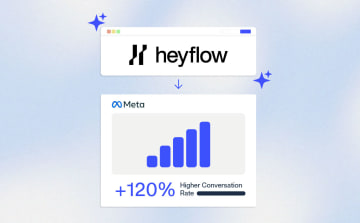
How to Increase Your Meta Ads CVR With the Heyflow AI Funnel Builder Platform
A flat Meta Ads conversion rate is usually a post-click problem. See three ways to fix your funnel and tracking with Heyflow, from full AI automation to manual control.
Read more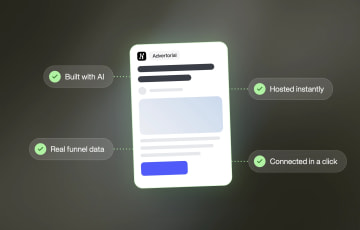
How to Create an Advertorial Landing Page That Sells (With Examples)
Learn how to create an advertorial landing page that sells, with examples by vertical, built by Heyflow’s AI and connected to your funnel in a click.
Read more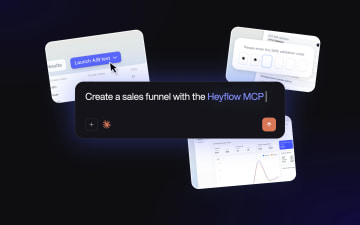
MCP: The Easiest Way to Create a Sales Funnel With AI
Prompt a sales funnel through MCP and it's hosted the moment it's built, connected in a click. That's what makes it the easiest way to build one with AI.
Read more